

Our Commitment to a
Sustainable Future
We’re on a mission to achieve net-zero carbon emissions (scope 1 & 2) by 2032,
while helping our clients meet their own sustainability goals through
innovative roofing systems and responsible practices.
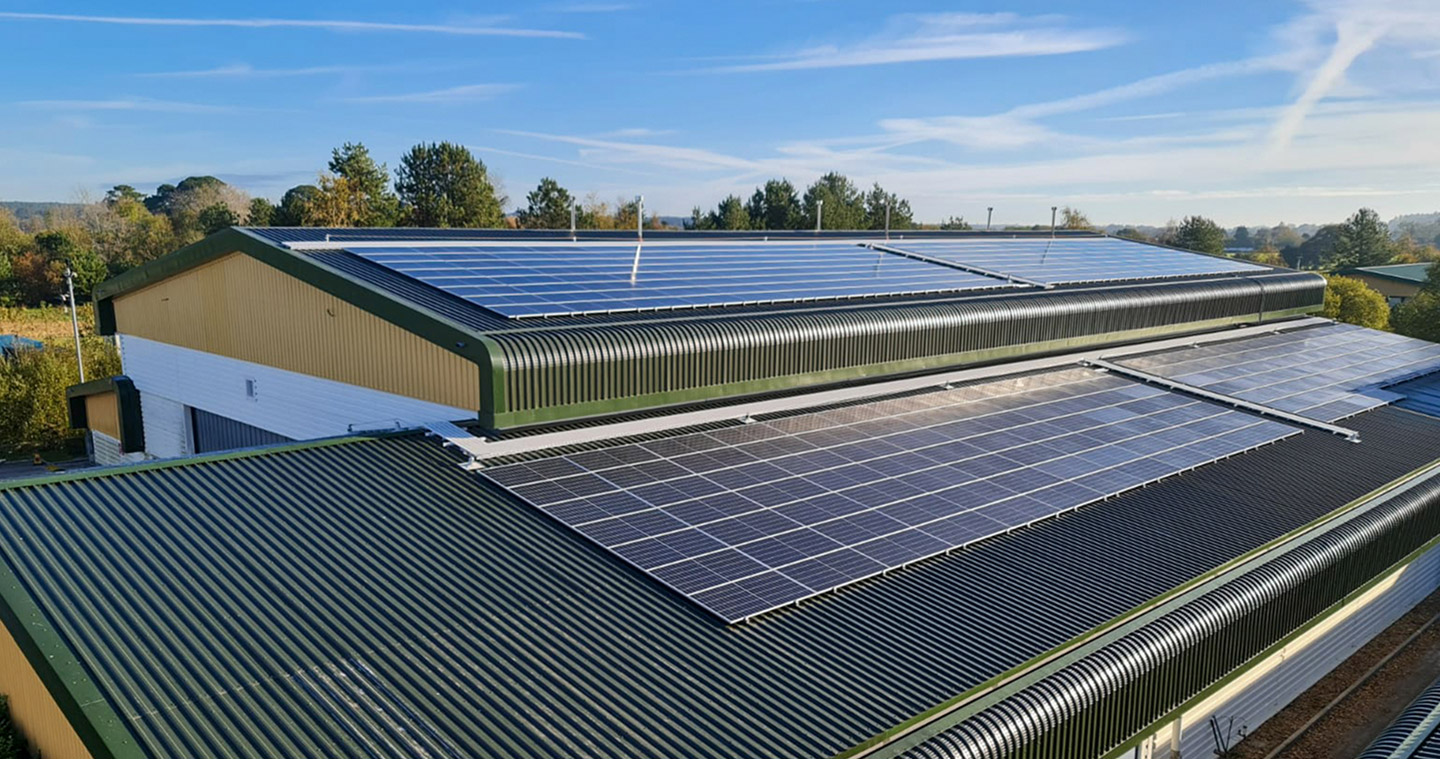

Roofing with a Positive Impact
We are proud that our work allows us to impact people’s lives positively, but we are acutely aware of our industry’s environmental impact on the planet.
The road to net-zero can be daunting, and with construction playing such a pivotal role in helping to achieve these aims, we wanted to find a better way to support our customers and their projects for the future.
As industry leaders, we believe we are responsible for spearheading positive change, introducing best practices throughout our approved contractors and helping lead our industry to do the right thing.
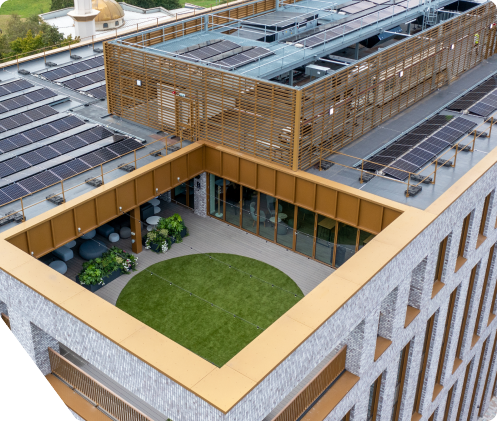
Our Targets
Throughout this journey, we will promote innovative sustainable waterproofing systems, responsible sourcing, and circular economy principles that maximise the value of the materials we use and minimise life cycle waste.
Through our long-standing partnerships, we will provide a lasting positive social impact on the communities in which we operate. We will put our people and contractors at the heart of everything we do, supporting their professional development to provide trusted technical expertise in a fair, inclusive, and respectful culture, promoting equality, diversity, inclusion, and good well-being.
Near-term target:
Absolute reduction in scope 1 and 2 emissions by 45%, based on our baseline year, by 2032.
Long-term target:
Absolute reduction in all three scopes of 90% by 2050.
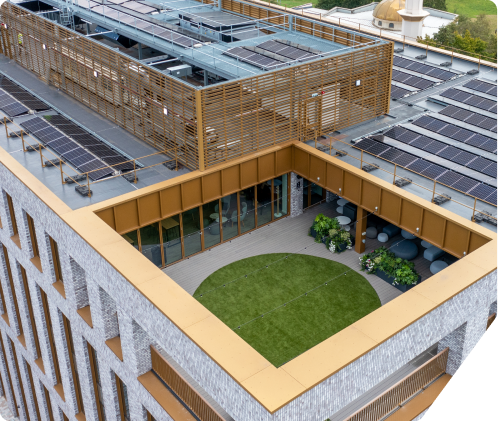
The 3 Key Pillars of our Sustainability Commitment
With our Sustainability Commitment, we will embed sustainability into everything we do by
reducing our carbon footprint and our customer’s operational carbon.
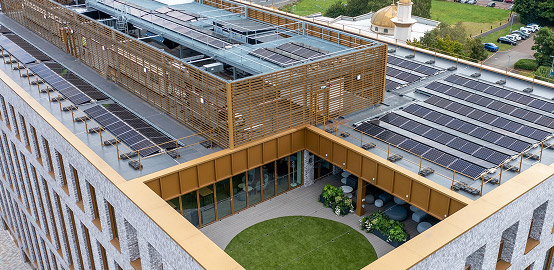
Carbon
We will reduce greenhouse gas emissions throughout our business and supply chain. We will support our customers to reduce their operational and whole-life carbon whilst maximising the environmental benefits of their roofing assets.
Resource Effciency & Waste
We will reduce our waste to landfill and increase the use of recycled, reused and recyclable materials within our projects. We will provide our customers with transparent data regarding our waste management, resource efficiency, circular economy.
People
All employees receive relevant sustainability training. We will engage with our supply chain and communities, supporting apprenticeships and creating wider social value through our Approved Contractor network.
Sustainability Report 2024
We’re proud to share our latest Sustainability Report, revealing a 7% drop in emissions, a 19.5% waste reduction, and continued investment in our people and partners.
Built around our three core pillars, Carbon, Resource Efficiency & Waste, and People, the report showcases our progress, evolving roadmap and how we’re helping clients meet their sustainability goals.
-7%
Total GHG emissions compared to 2023
19.5%
Decrease of total waste in 2023 vs. 2023
ZERO
Waste to landfill in 2024
Our Sustainability Roadmap
We’re on the road to a more sustainable future. Our Sustainability Roadmap marks the key stage gates towards achieving net-zero carbon (scope 1&2) by 2032.
What Does This Mean
for Our Customers?
Our Sustainability Commitment embeds sustainability into everything we do, by reducing our carbon footprint and our customer’s operational carbon. Working with us, our customers can expect a long-term commitment that fully supports and enables their unique environmental initiatives.
Our Systems
We work hand in hand with our supply chain to develop their sustainable capabilities and reduce the embodied carbon in a product’s life cycle. Our customers can confidently partner with us for the lifetime of their building, knowing that material manufacture, waste production, recycling and transportation have been carefully considered.
Our Communities
We are taking every step to better understand the communities we operate in and have extensive experience in delivering meaningful social value to our customers and communities, from building envelope design incorporating bio-diverse rooftop spaces to supporting apprentices through our nationwide network of Approved Contractors.
Sustainability Through Ownership
As a 100% employee-owned business we strive to be a great place to work, with a diverse and friendly team who enjoy working together to deliver value for our customers.
We believe that our people are what make us a successful business. Through continuous training and engagement workshops, our Technical Managers can provide tailored support for our customer’s decarbonisation strategies and clear roadmaps for sustainable roof asset management.
Employee ownership means every person at Garland UK has a financial stake in delivering sustainable solutions that protect buildings for decades—not just meeting short-term targets, but ensuring long-term environmental performance that benefits the communities we serve.
Frequent Questions
Many of our customers have questions relating to our commitment to a more sustainable future.
Carbon Neutral refers to any carbon dioxide (CO2) released into the atmosphere from a company’s activities, which is then balanced by an equivalent amount of carbon being removed from the atmosphere. Carbon offsets can be sought to achieve this, with a minimum requirement to meet Scope 1 & 2 emissions only. Green roofs are considered effective in the reduction of atmospheric CO2 because of their ability to absorb CO2 and reduce a building’s overall energy consumption.
Taking one step further than Carbon Neutral, Net-Zero Carbon also achieves a balance between the carbon emitted into the atmosphere and the carbon removed from it, but it must span across Scope 1, 2 and 3 emissions. A critical difference is that all efforts must be made to mitigate carbon across the business before offsetting the small amount remaining that is unable to be avoided.
- Scope 1 covers all direct emissions from owned or controlled sources.
- Source 2 factors the indirect emissions from the generation of purchased electricity, heating etc., consumed by the business.
- Scope 3 includes all other indirect emissions in a business’s supply chain.
Operational Carbon is the amount of carbon emitted during the operational and daily use of a building. Sustainably designed roofing projects can significantly reduce operational carbon by including Green roofs and solar PV systems.
Embodied Carbon is the amount of carbon emitted associated with building construction, including the extraction, transportation, manufacture and installation of materials. Sustainably designed roofing projects can significantly reduce embodied carbon by including long-life systems (such as metal roof panels) that can be used for the life of a building, avoiding regular replacement and mitigating waste to landfill.
An R-MER metal system is manufactured from up to 55% recycled materials and is 100% recyclable at the end of its life, making it a highly sustainable roofing system.
A Green Shield green roof system will improve air quality and provide natural habitats that encourage biodiversity. Green roofs help to keep buildings cool, reducing energy consumption and costs, making it a highly sustainable roofing system.
A Solarise PV panel system reduces the carbon output of a building by utilising renewable solar power energy rather than other energy sources such as electricity or gas. Solar PV panels significantly reduce the operational carbon of a building, making it highly suitable for sustainable roofing.